Gamification in Health and Fitness Apps: Balancing Fun and Effectiveness
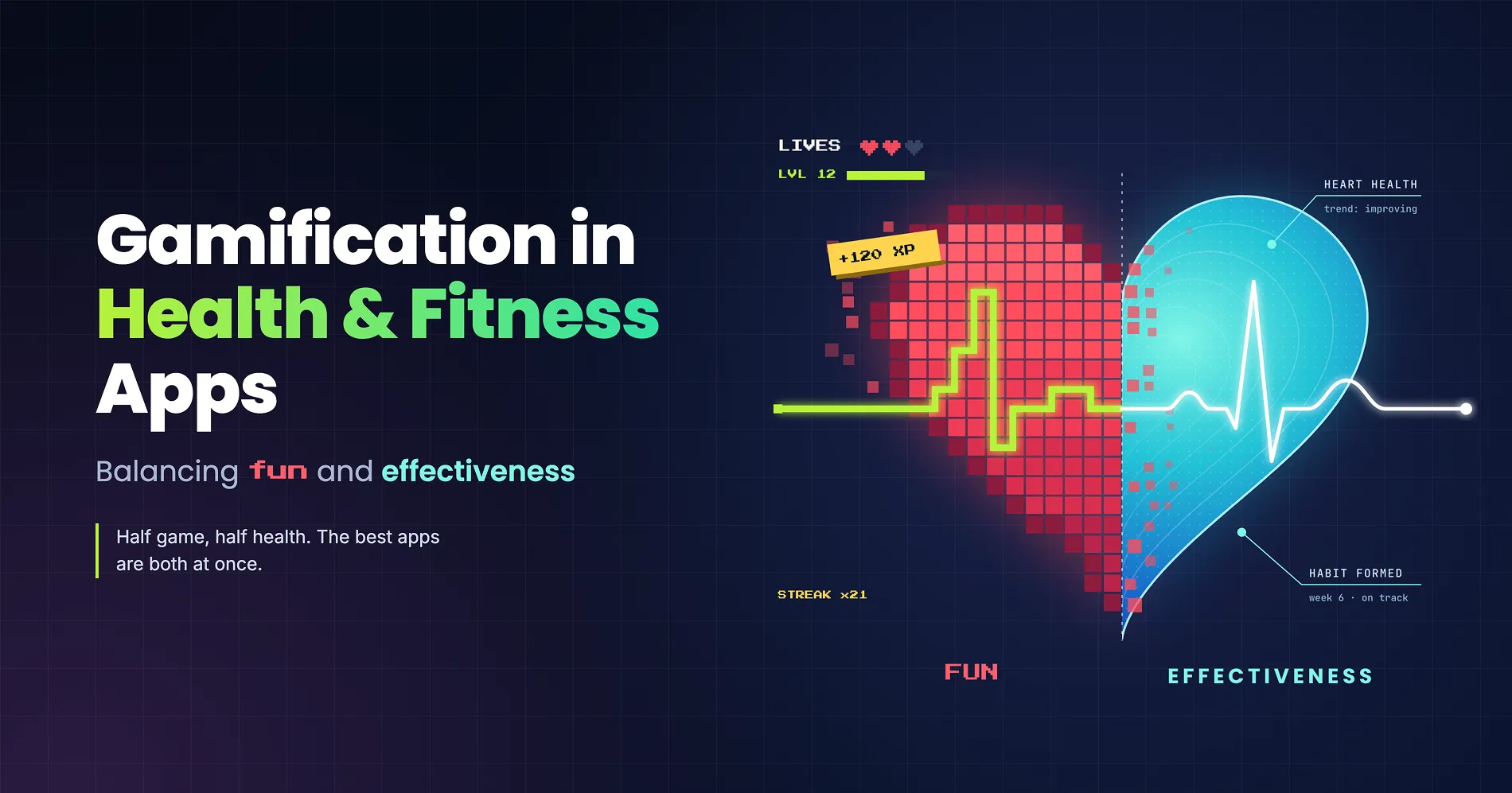
Most users quit health apps within weeks. Gamification uses streaks, challenges, badges and rewards to turn healthy habits into something people want to come back to, but done badly it creates guilt, burnout and empty engagement. In this guide, learn how gamification works in health and fitness apps, which mechanics actually change behaviour, where it backfires and how to design it the right way.
Varun Patel
CEO
Someone downloads your fitness app on a Monday. They log three workouts, feel great, then miss a day. Then another. By the third week, the app is buried in a folder they never open. You paid to acquire that user, and they left before the habit ever formed.
Gamification in health and fitness apps solves this. It uses game mechanics like streaks, challenges, levels and rewards to make healthy actions feel rewarding today, not just in six months. This guide explains what gamification is and how it works inside a health app. It also covers the mechanics that actually change behaviour, where gamification backfires and how to get the balance right.
At Skyphr, we design and build mobile apps and SaaS products, from UI/UX design to launch, including healthcare and booking apps. The ideas here come from how we plan real product features, not theory.
What is gamification in health and fitness apps?
Gamification is the use of game design elements in a non-game product to motivate people to take an action and keep taking it.
In a health or fitness app, it usually has three parts:
Goals. A clear target, such as 10,000 steps, three workouts a week or eight glasses of water.
Feedback. Progress bars, streaks and stats that show the user how close they are, right now.
Rewards. Badges, levels, unlocked content, real-world perks or simply recognition from friends.
Once these are connected to real data from the phone, a wearable or the user's own logs, the app stops being a tracker. It becomes a coach that notices effort, celebrates progress and nudges the user back when they slip.
You'll also hear it called behaviour change design, habit-forming design or engagement design. The goal is the same: make the healthy choice the easy and enjoyable one.
Gamified health app vs basic tracking app: what's the difference?
| Aspect | Basic tracking app | Gamified health app |
|---|---|---|
| Core experience | Log data, view charts | Goals, progress, rewards |
| Motivation | Relies on user willpower | Builds momentum with small wins |
| After a missed day | Nothing happens | Gentle nudge and easy restart |
| Social layer | Usually none | Challenges, teams, friendly competition |
| Long-term retention | Drops off quickly | Stronger, if designed well |
How does gamification work? A typical user journey
The user sets a simple, personal goal during onboarding, such as "walk 20 minutes a day".
The app breaks it into small daily actions and shows progress the moment one is done.
Each completed action builds a streak, earns points or moves the user closer to the next level.
Milestones unlock a reward, such as a badge, new workout plans or a discount from a partner gym.
Social features let the user join a challenge with friends, colleagues or a community.
When the user slips, the app responds with encouragement and an easy way back, not punishment.
7 game mechanics that work in health and fitness apps
Streaks build daily habits. A visible streak gives users a reason to show up today, which is how routines form.
Progress bars make goals feel reachable. Seeing 70% done is far more motivating than a raw number.
Levels reward long-term commitment. Levelling up gives users a sense of growth beyond any single workout.
Challenges add variety. Weekly or monthly challenges keep the experience fresh and lift fitness app engagement.
Social features create accountability. Teams and friend challenges make users less likely to quit on others.
Meaningful rewards drive user retention. Unlocked content, coach feedback or real-world perks beat empty points.
Personalised goals keep it fair. Goals that adapt to each user's level stop beginners from feeling left behind.
Where gamification backfires: the balance problem
Adding badges is easy. Building habits that last is harder. Gamification goes wrong when the game becomes more important than the health goal.
Streak anxiety. Losing a 90-day streak can feel so bad that users quit entirely. Add streak freezes, rest days and weekly goals instead of strict daily ones.
Rewards that replace real motivation. If users only work out for points, they stop when the points stop mattering. Tie rewards to how users feel and what they achieve.
Unhealthy competition. Leaderboards based on calories burned or weight lost can push people towards overtraining or extreme dieting. Reward consistency and effort, not extremes, and let users opt out.
Gaming the system. If shaking a phone counts as steps, some users will do it. Use verified data from wearables where accuracy matters.
Notification overload. Too many reminders feel like nagging. Let users control frequency and timing.
Ignoring rest and recovery. A good health app should celebrate rest days, sleep and recovery, not just activity.
The best gamified apps feel like a supportive coach, not a slot machine.
The hidden cost of poor retention
Try this simple calculation for your app:
New users per month × % who stop using the app within 30 days × average monthly revenue per user × months they would have stayed = revenue lost to churn
Run it with your own numbers. Even a small improvement in early retention changes the economics of the whole app, because you already paid to acquire those users. Thoughtful gamification is one of the most practical ways to protect that investment.
Best use cases by industry
Gyms and fitness studios: attendance streaks, class challenges and member rewards.
Corporate wellness programmes: team step challenges and healthy habit campaigns across offices.
Physiotherapy and rehab clinics: daily exercise adherence with progress tracking a therapist can review.
Yoga and meditation apps: practice streaks, guided journeys and mindful milestones.
Nutrition and diet coaching: hydration goals, meal logging habits and coach check-ins.
Chronic care and medication apps: medication reminders and routine tracking that families or clinicians can follow.
Health insurance providers: activity-based rewards that encourage healthier members.
How to design the right gamification for your app
Before you invest, ask these questions:
What health outcome are we driving? Pick one, such as weekly active workouts or exercise adherence, and design every mechanic around it.
Who are our users? A 25-year-old runner and a 60-year-old rehab patient need very different motivation.
Do the rewards matter to them? Test whether users care about badges, real perks, coach feedback or social recognition.
How do we handle failure? Plan what happens after a missed day before you launch.
Does it connect to their devices? Integration with Apple Health, Health Connect on Android and popular wearables makes tracking effortless and accurate.
Is health data handled safely? Health data is sensitive. Check consent, storage and compliance with laws such as India's DPDP Act, GDPR or HIPAA, depending on your market.
Gamification is only one layer of a health app. It depends on solid onboarding, clean data and a reliable backend. That's why it pays to plan everything together with a team that does both [mobile app development and custom software development.
How Skyphr builds gamified health and fitness apps
We don't bolt on a one-size-fits-all points system. We design gamification around your users and the health outcome you want:
Discovery: we define your target users, the core health habit and the metric that shows success.
Design: our UI/UX team maps the habit loop, rewards, progress screens and recovery flows after missed days.
Build and integration: we build the app and connect it to wearables, health platforms, payments and your admin panel.
Testing: we test with real users to find what motivates them and what feels like pressure.
Launch and improve: we track retention and engagement, then tune challenges and rewards over time.
Planning a subscription fitness platform or a corporate wellness product? Our SaaS product development team can take it from MVP to scale. We can also add AI coaching and personalised plans through SkyAI, our AI engineering division.
Have an app idea or an existing app with a retention problem? Book a call, and we'll walk you through how we would design the gamification loop for your product.
Frequently asked questions
Ready to build a health app people keep using?
Most health apps don't fail because of bad features. They fail because users stop opening them. Well-designed gamification turns small daily actions into habits that last, without losing sight of the health goal.
Book a free 30-minute consultation with Skyphr, or explore SkyAI to see how we add AI to apps. While you're here, get a free website audit with SkyLens to check that your app's website is turning visitors into downloads.